Guide
Best Organic Baby Food Brands 2026 | Reviewed
By Baby Feeding Editorial Team · Updated 2026-03-11
Written by Sarah Mitchell, Paediatric Nutritionist | Last updated: March 2026
The best organic baby food brands in 2026 are Happy Baby Organics, Plum Organics, Beech-Nut Organics, Earth's Best Organic, Gerber Organic, Little Spoon, Serenity Kids, and Sprout Organic. Each brand carries USDA Organic certification, avoids artificial additives, and offers stage-appropriate options from smooth purées through textured meals for older babies.
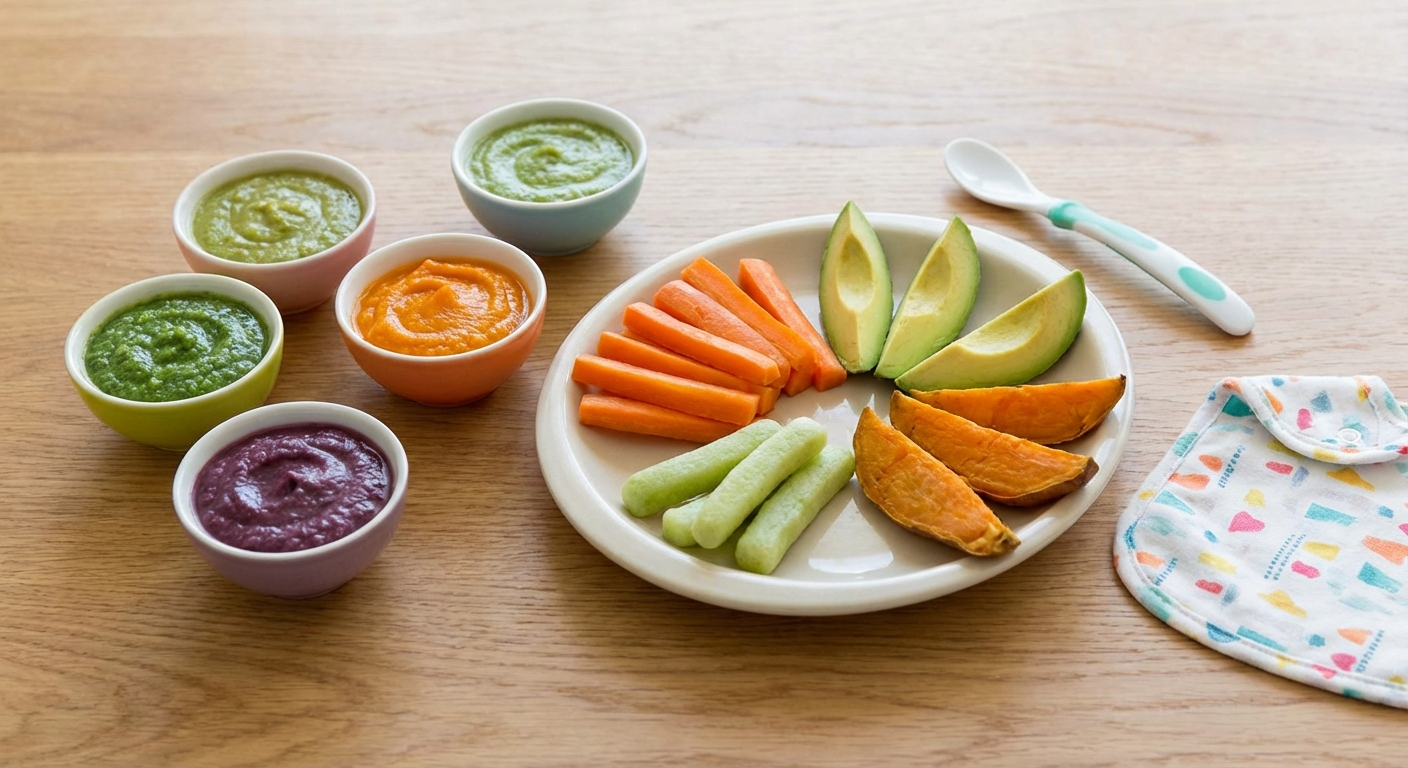 The top organic baby food brands of 2026, reviewed for safety, nutrition, and value.
Table of Contents
- Why Choose Organic Baby Food?
- Top 8 Organic Baby Food Brands Reviewed
- How to Choose the Best Organic Baby Food
- Organic Baby Food by Stage
- Safety, Certifications, and Heavy Metals
- Frequently Asked Questions
- Sources and Methodology
Why Choose Organic Baby Food?
Choosing what to feed your baby is one of the most important decisions you'll make in those early months. When you reach for that first jar or pouch, the question of organic versus conventional is often front of mind — and for good reason.
Infants are uniquely vulnerable to pesticide exposure. Pound for pound, babies eat more food relative to their body weight than adults. Their rapidly developing brains, nervous systems, and organs are far more sensitive to environmental toxins. The Environmental Working Group (EWG) notes that many common fruits and vegetables used in baby food — including apples, pears, peaches, and spinach — frequently test positive for multiple pesticide residues when grown conventionally.
USDA Organic certification requires that a product contain at least 95% organically produced ingredients. It prohibits the use of synthetic pesticides, synthetic fertilizers, genetic engineering (GMOs), irradiation, and sewage sludge. For baby food specifically, this standard provides a meaningful layer of protection during a critical developmental window.
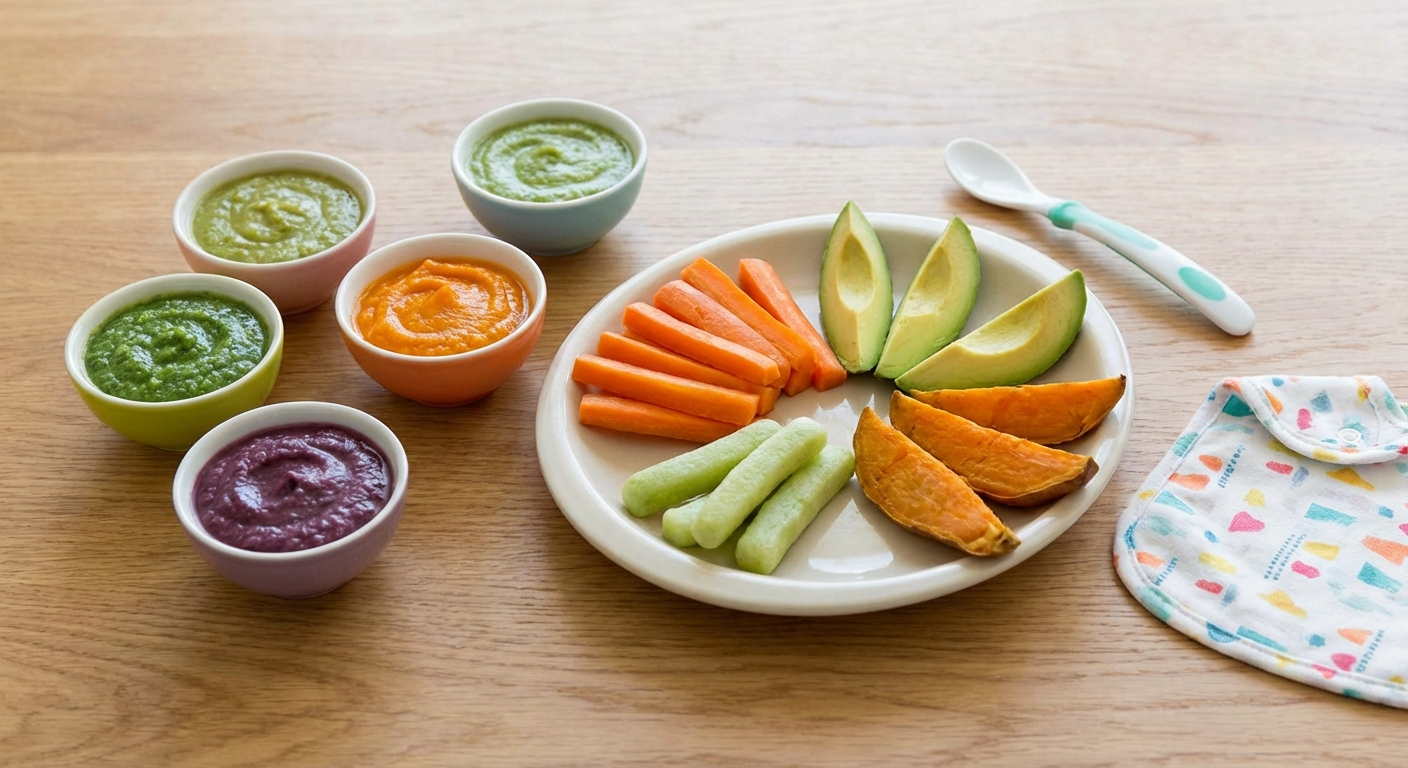 Starting solids with organic food helps limit pesticide exposure during your baby's most critical developmental period.
Beyond pesticides, organic baby food brands tend to be more transparent about sourcing, processing, and ingredient quality. Many voluntarily test for heavy metals — a concern that gained significant attention following a 2021 US Congressional report revealing elevated levels of arsenic, lead, cadmium, and mercury in several commercial baby foods.
If you're making some of your own baby food at home, check out our guide to the best baby food makers to find the right blender or steamer for your kitchen. And if you're navigating the debate between traditional purées and a more hands-off approach, our comparison of baby-led weaning vs purées breaks down both methods in detail.
For parents who are also thinking about their own nutrition during this period, postpartum nutrition while breastfeeding is closely connected to what your baby ultimately receives through breast milk — so what you eat matters too.
Top 8 Organic Baby Food Brands Reviewed
We evaluated each brand against five criteria: USDA certification, ingredient quality, nutritional profile, heavy metals transparency, and value for money. Here's our full breakdown.
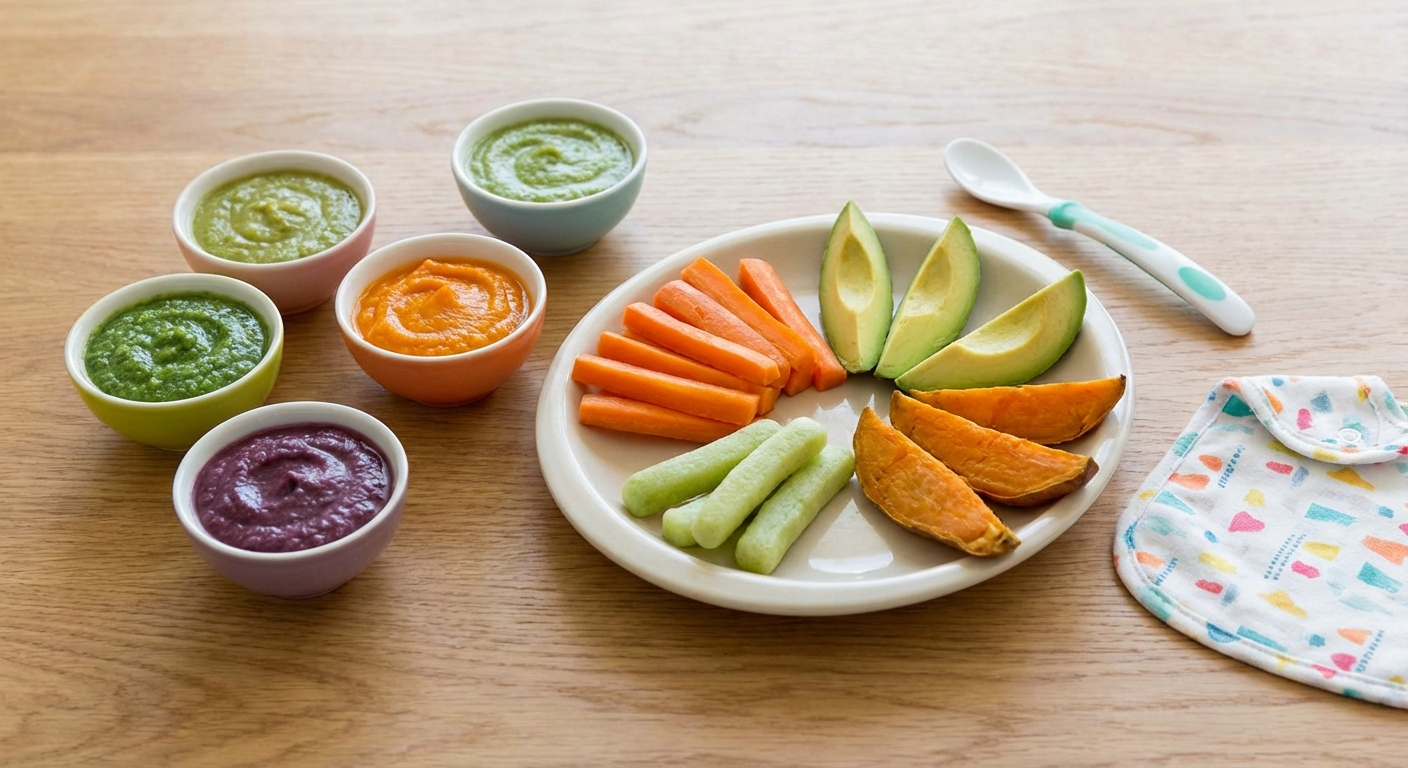 All eight brands reviewed in this guide carry USDA Organic certification as a baseline requirement.

Happy Baby Organics
Happy Baby Organics is our top pick for most families. Founded in 2006, this brand has long been the gold standard for accessible, trustworthy organic baby food. Their range spans Stage 1 single-ingredient purées through Stage 3 textured meals, plus finger foods, cereals, and snacks. Happy Baby uses non-GMO, USDA Organic certified ingredients with no added salt, sugar, or starch. Their "clearly crafted" packaging lists every ingredient with its country of origin — a level of transparency rare in the category. They also publish their heavy metals testing results publicly on their website.
- ✅ USDA Organic certified
- ✅ Non-GMO Project Verified
- ✅ Full ingredient origin transparency
- ✅ Wide variety across all stages
- ✅ Publishes heavy metals testing data
- ❌ Higher price point than conventional brands
- ❌ Some pouches have higher natural sugar content from fruit

Plum Organics
Plum Organics consistently impresses with bold, globally inspired flavour combinations that expose babies to a wider taste palette from early on. Think mango and black bean, or kale and apple with Greek yogurt. A certified B Corporation, Plum holds itself to environmental and social standards above and beyond organic certification. Their ingredients are USDA Organic and non-GMO, and the brand has reformulated several products following scrutiny around heavy metals in rice-containing products. Plum also offers a strong Stage 3 range with genuinely textured meals that bridge the gap between purées and family food.
- ✅ USDA Organic certified
- ✅ Certified B Corporation
- ✅ Diverse, globally inspired flavours
- ✅ Strong Stage 3 textured options
- ❌ Some combinations are high in fruit sugar
- ❌ Slightly harder to find in smaller stores

Beech-Nut Organics
Beech-Nut is one of the oldest baby food companies in America, and their organic line delivers on their legacy promise of simplicity and quality. Their Stage 1 purées are single-ingredient, made from real fruit and vegetables with nothing else added — just the food itself. Beech-Nut was notably transparent following congressional scrutiny of heavy metals, publishing voluntary testing data and being among the first brands to commit to stricter internal limits on arsenic, lead, cadmium, and mercury. For parents who want clean, honest ingredients without paying a premium, Beech-Nut Organics is the best value pick in this guide.
- ✅ USDA Organic certified
- ✅ Single-ingredient Stage 1 products
- ✅ Proactive heavy metals transparency
- ✅ Best value per serving in this guide
- ✅ Glass jar option available
- ❌ Smaller flavour range than competitors
- ❌ Less variety in Stage 3 options

Gerber Organic
Gerber's organic line brings the accessibility and widespread availability of the world's most recognised baby food brand into the organic space. You'll find Gerber Organic at virtually every grocery store in the country, which makes it a practical choice for parents who can't always reach specialty baby stores. The Organic range meets USDA standards and includes both pouches and jars across all three stages, plus an organic rice cereal that has recently been reformulated to reduce arsenic levels. Gerber's paediatric nutrition research team is among the most extensive in the industry, and that expertise shows in the balanced nutritional profiles of their products.
- ✅ USDA Organic certified
- ✅ Widely available at all major retailers
- ✅ Full range from Stage 1 to Stage 3
- ✅ Backed by extensive paediatric nutrition research
- ❌ Parent company (Nestlé) may be a concern for some consumers
- ❌ Some products contain organic corn starch as a thickener

Earth's Best Organic
Earth's Best Organic is a pioneer — founded in 1987, it was the first USDA Organic certified baby food brand in the United States. That history of commitment to organic principles runs deep through their product formulations. Earth's Best offers one of the broadest ranges in the organic baby food category, covering cereals, purées, snacks, toddler meals, and formula. Their whole grain oatmeal cereal is a trusted first cereal choice for millions of parents. Earth's Best products are consistently priced in the mid-range, making the organic choice financially accessible for more families.
- ✅ USDA Organic certified — pioneer brand since 1987
- ✅ Broadest range including formula and cereals
- ✅ Mid-range pricing
- ✅ Widely available
- ❌ Some products contain organic tapioca starch
- ❌ Owned by Hain Celestial — less independent than some brands

Little Spoon
Little Spoon has disrupted the baby food category with a fresh, subscription-based model that delivers refrigerated — never frozen, never shelf-stable — baby food directly to your door. Their "Babyblends" are cold-pressed to preserve more nutrients than heat-processed alternatives, and every ingredient is certified USDA Organic. Little Spoon stands out for offering genuinely personalised meal plans based on your baby's age, dietary needs, and stage progression. For parents who want premium nutrition without the prep time and are comfortable with a subscription model, Little Spoon is in a league of its own. The price point is the highest in this guide, but the quality justifies it.
- ✅ USDA Organic certified
- ✅ Fresh, refrigerated (not shelf-stable)
- ✅ Cold-pressed for maximum nutrient retention
- ✅ Personalised subscription meal plans
- ✅ No artificial preservatives possible (fresh product)
- ❌ Highest price point in this guide
- ❌ Subscription model only
- ❌ Requires refrigeration — less convenient for travel

Serenity Kids
Serenity Kids occupies a unique and important niche in the organic baby food market: they specialise in savoury, protein-forward, meat-based purées that most other brands simply don't offer. Their pouches feature ethically sourced meats — bison, turkey, chicken, and salmon — paired with organic vegetables and healthy fats. This macronutrient profile more closely mirrors the nutrient density that babies need for brain development than the fruit-heavy, high-sugar products that dominate supermarket shelves. Serenity Kids products are paleo-friendly, grain-free, and free from the rice-based ingredients that raise arsenic concerns. A genuinely different and nutritionally excellent choice.
- ✅ USDA Organic certified
- ✅ High-protein, meat-based options
- ✅ Ethically sourced meats (bison, turkey, salmon)
- ✅ Grain-free and rice-free
- ✅ High healthy fat content for brain development
- ❌ Premium price point
- ❌ Savoury focus may not suit all babies initially
- ❌ Limited Stage 1 range

Sprout Organic
Sprout Organic punches above its weight as a smaller brand competing with category giants. Their products are USDA Organic certified and non-GMO, with a focus on nutritionally complete "power blends" that incorporate diverse vegetables, fruits, whole grains, and legumes. Sprout's Stage 2 and Stage 3 pouches are particularly strong — they include ingredients like lentils, quinoa, and chickpeas that you won't commonly find in competing products at this price point. Sprout is also one of the few brands to regularly reformulate based on updated nutritional research, which reflects their genuine commitment to getting baby nutrition right.
- ✅ USDA Organic certified
- ✅ Non-GMO Project Verified
- ✅ Diverse whole grains and legumes
- ✅ Strong nutritional profile in Stage 2 and 3
- ✅ Mid-range pricing
- ❌ Smaller range than major brands
- ❌ Less widely available in stores
How to Choose the Best Organic Baby Food
With eight strong brands reviewed above, how do you decide what's right for your baby? Here are the factors that matter most.
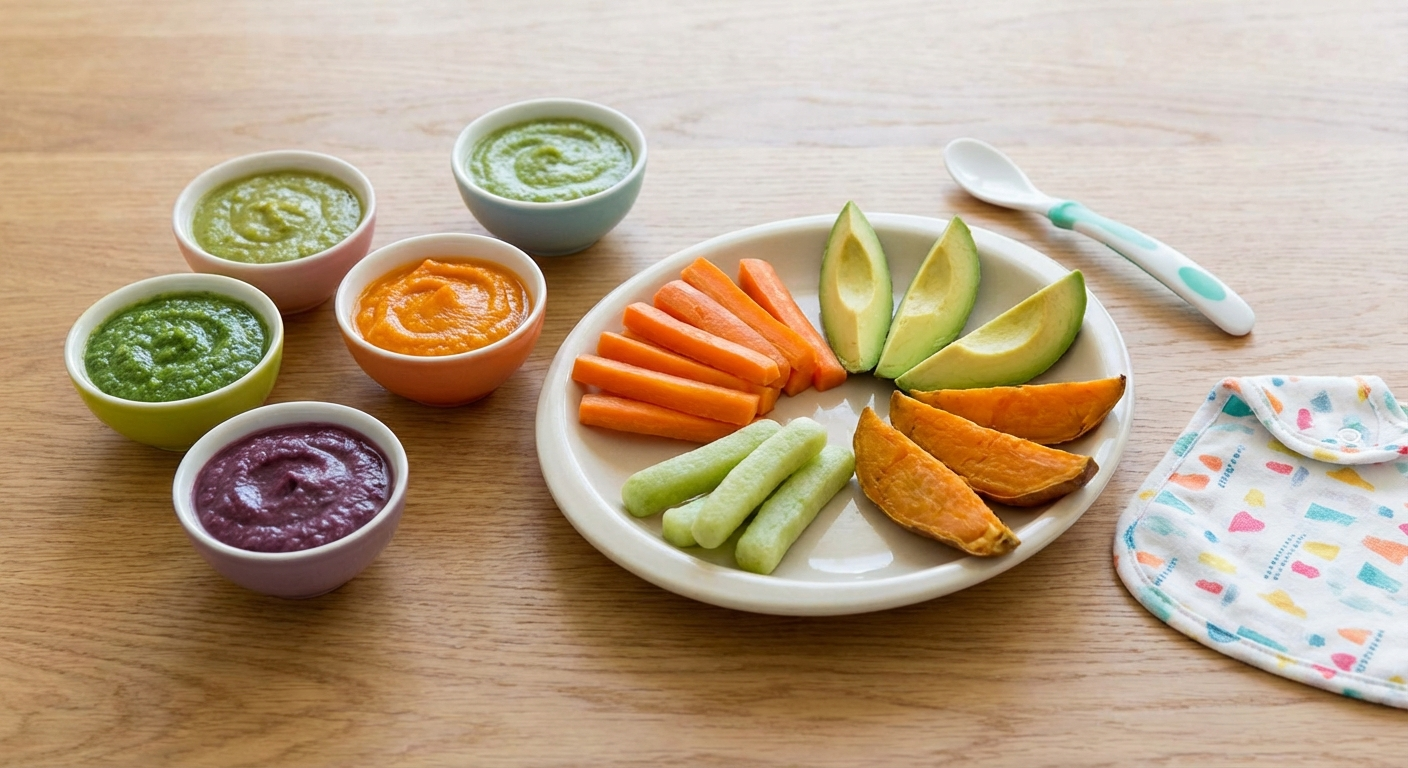 Always check the ingredient list — not just the "organic" label — when choosing baby food.
Check the Certifications
USDA Organic is the baseline, but it's not the whole picture. Also look for:
- Non-GMO Project Verified: Confirms no genetically modified organisms
- Clean Label Project Certified: Third-party testing for heavy metals, pesticide residues, and contaminants
- Certified B Corporation: Signals broader commitments to social and environmental responsibility
Read the Ingredient List
The gold standard for Stage 1 baby food is a single ingredient: one fruit or vegetable, nothing else. For Stage 2 and beyond, look for:
- Real whole ingredients listed first (not concentrates or derivatives)
- No added salt or sugar
- No organic tapioca starch or organic corn starch as primary filler ingredients
- No "natural flavors" — a vague label term that can mask many things
Consider the Nutritional Profile
Most commercial baby food is fruit-forward, which is naturally sweet and appealing to babies — but can skew feeding toward a sugar-heavy palate. Look for products that include:
- Dark leafy greens (spinach, kale)
- Protein sources (lentils, chicken, beef, fish)
- Healthy fats (avocado, olive oil)
- Iron-rich foods (fortified cereals, meats, legumes)
Iron is particularly important. Babies' stored iron from birth depletes around 6 months, making iron-containing first foods essential. The first foods for 6-month-old guide covers this in detail.
Think About Your Lifestyle
Convenience: Pouches win for travel and on-the-go. Jars are better for home feeding and spoon practice.
Budget: There's a significant price range in organic baby food — from around $1.20 per serving for Beech-Nut to over $5 per serving for Little Spoon's fresh blends. A hybrid approach (premium fresh for weekdays, more affordable shelf-stable for weekends) can work well.
Dietary requirements: If your family follows paleo, grain-free, or high-protein principles, Serenity Kids is your brand. If you're vegetarian, Earth's Best and Happy Baby both offer excellent plant-based ranges.
If you're also managing family meal planning with a new baby, integrating organic baby food into a broader family food strategy can make the whole process more sustainable.
Organic Baby Food by Stage
Understanding how baby food stages work helps you make the right choices as your baby grows.
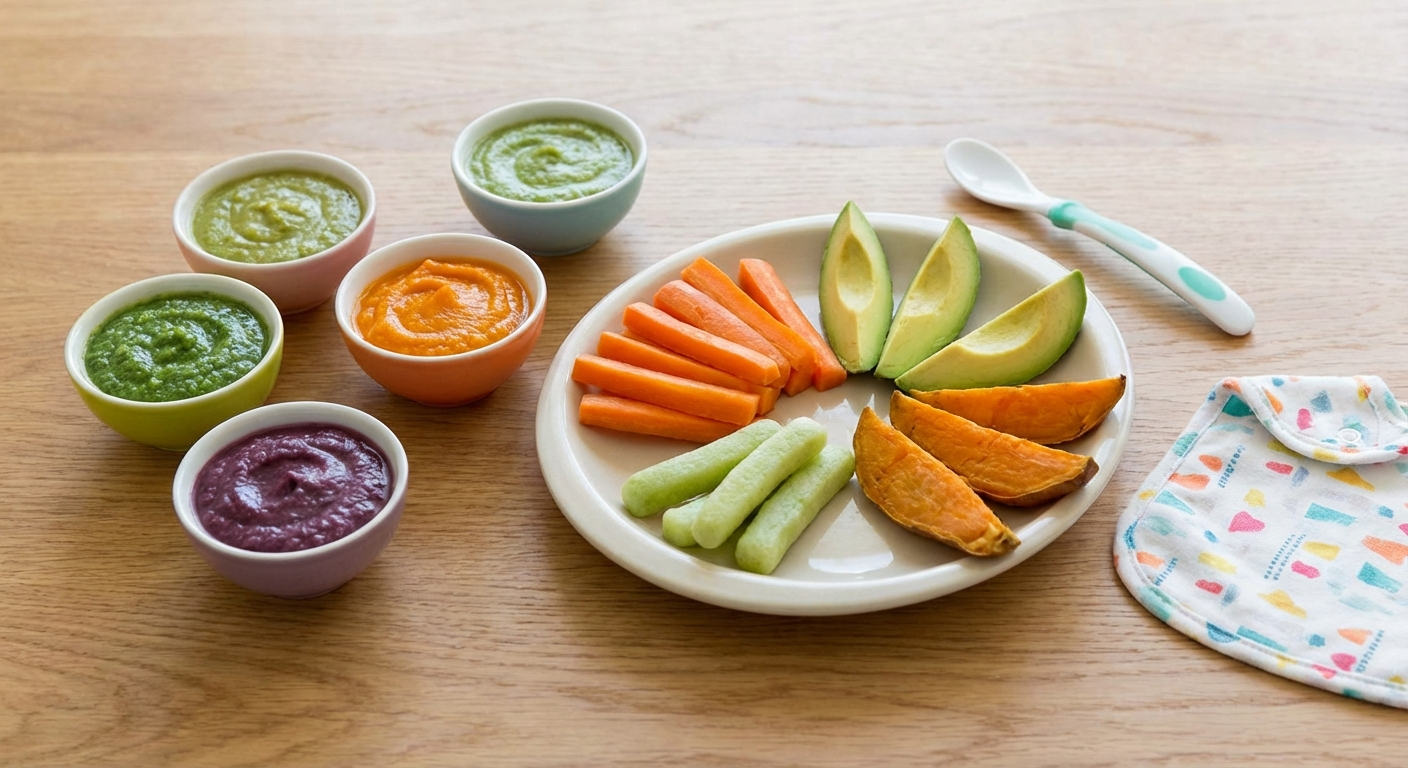 Baby food stages guide — from first purées at 6 months to textured family foods at 12 months.
Stage 1 (Around 6 Months)
Stage 1 foods are smooth, single-ingredient purées with a thin, runny consistency. They introduce your baby to individual flavours and textures one at a time.
Best Stage 1 picks:
- Happy Baby Organics Simple Combos (single vegetable blends)
- Beech-Nut Organics Stage 1 (apple, pear, sweet potato, pea)
- Earth's Best Organic Stage 1 (wide range of fruit and vegetable options)
- Gerber Organic 1st Foods (available everywhere, good quality single ingredients)
Start with vegetables before fruits to establish a preference for less sweet foods. Good starter vegetables include sweet potato, butternut squash, and peas.
What to avoid at Stage 1:
- Honey (risk of infant botulism under 12 months)
- Cow's milk as a main drink
- High-mercury fish
- Added salt or sugar
- Any pouch where baby is sucking directly — use a spoon at this stage
Stage 2 (Around 7-8 Months)
Stage 2 introduces combination purées and slightly thicker textures. Babies at this stage are developing their ability to manage more complex flavours and a bit more texture.
Best Stage 2 picks:
- Plum Organics Stage 2 (excellent globally inspired combinations)
- Little Spoon Babyblends (premium fresh options with diverse ingredients)
- Sprout Organic Stage 2 (lentil and legume combinations stand out)
- Happy Baby Organics Stage 2 (broad range, including green vegetable combinations)
Stage 3 (Around 9-12 Months)
Stage 3 foods have genuine texture — small soft chunks, mashed combinations, and meal-style products. This is the bridge between baby food and family food.
Best Stage 3 picks:
- Plum Organics Stage 3 (genuinely textured, meal-style pouches)
- Happy Baby Organics Stage 3 (good variety of grain and protein combos)
- Serenity Kids meat-based pouches (excellent protein source)
- Gerber Organic 3rd Foods (widely available, balanced meals)
At this stage, many families also begin incorporating more baby-led weaning approaches alongside pouches, offering soft finger foods at mealtimes.
Transitioning to Family Food (12 Months+)
By 12 months, most babies are ready to eat much of what the rest of the family eats, adapted for texture and without added salt. Commercial baby food can still be useful for travel and quick meals, but it shouldn't be the primary food source beyond this age.
Safety, Certifications, and Heavy Metals
The issue of heavy metals in baby food deserves serious, honest attention.
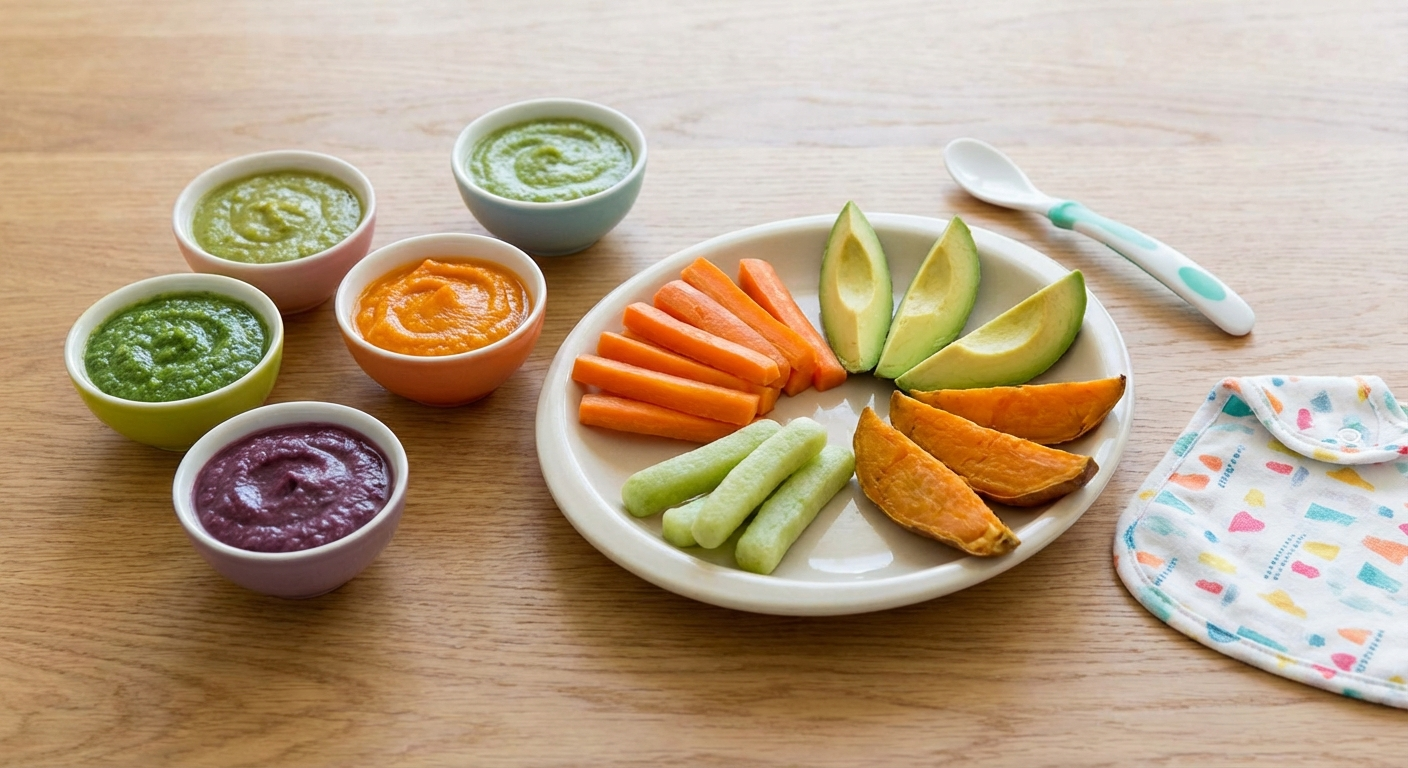 Key certification seals to look for on organic baby food packaging — each offers different layers of protection.
In February 2021, a US House of Representatives subcommittee released a report titled "Baby Foods Are Tainted with Dangerous Levels of Arsenic, Lead, Cadmium, and Mercury." The report found that several major baby food manufacturers had internal testing results showing significant heavy metal contamination — and chose not to disclose this publicly.
This was a watershed moment for the industry. The brands that responded best — with transparency, reformulation, and voluntary third-party testing — are largely the ones we recommend in this guide.
Understanding the Risks
Heavy metals occur naturally in soil and water, which means they can be present in organically grown food as well as conventional. Organic certification does not guarantee the absence of heavy metals. Key risk factors include:
- Rice-based products: Rice accumulates inorganic arsenic from soil and water at higher rates than other grains. Rice cereal — once the standard first cereal recommendation — is now considered higher risk. Earth's Best and Happy Baby both offer oat-based alternatives.
- Root vegetables: Carrots, sweet potatoes, and beets can accumulate lead and cadmium from soil.
- High-rice snacks: Many puffs and teething crackers are rice-based. Check labels carefully.
Brands With the Best Heavy Metals Transparency
Based on publicly available testing data and independent assessments (including Clean Label Project testing):
- Happy Baby Organics — publishes detailed heavy metals testing results online
- Beech-Nut Organics — proactively reformulated and published voluntary testing data post-2021 report
- Little Spoon — fresh product model with independent testing; publishes results
- Serenity Kids — grain-free focus removes rice-based arsenic risk; tests and publishes results
Practical Steps for Parents
- Rotate between brands to reduce exposure to any single contaminant
- Vary grains — don't rely solely on rice-based products
- Prioritise oat, quinoa, or millet-based cereals over rice
- Check the brand's website for testing data before purchasing
- The EWG's Children's Health Initiative provides updated guidance on baby food safety
Frequently Asked Questions
What is the healthiest organic baby food brand?
Happy Baby Organics and Serenity Kids consistently rank as the healthiest options. Happy Baby carries USDA Organic certification and uses non-GMO ingredients with no added salt, sugar, or starch. Serenity Kids stands out for its ethically sourced meats and high healthy fat content, which supports infant brain development.
Is organic baby food really better than conventional?
Organic baby food limits exposure to synthetic pesticides and fertilizers. The EWG recommends choosing organic for high-pesticide produce like apples, pears, and spinach — crops commonly used in baby food. While organic does not guarantee superior nutrition in every case, it reduces the chemical burden on a developing infant's system.
When should I start giving my baby organic food?
The American Academy of Pediatrics recommends starting solid foods around 6 months of age, when babies show developmental readiness: sitting up with minimal support, showing interest in food, and losing the tongue-thrust reflex. See our full guide to first foods for 6-month-old for a detailed starter plan.
What certifications should I look for on organic baby food?
Look for USDA Organic (requires 95%+ organic ingredients), Non-GMO Project Verified, and ideally Clean Label Project certification. The Clean Label Project tests for heavy metals, pesticide residues, and contaminants beyond what the USDA organic standard covers — an important extra layer of protection for baby food.
Are baby food pouches safe for babies?
Pouches are safe and convenient, but paediatric dietitians caution against overuse. Sucking from a pouch bypasses the sensory experience of tasting and smelling food from a spoon, which can affect texture acceptance and self-regulation of food intake. Use pouches as a practical on-the-go option, but aim to offer most meals from a spoon.
Which organic baby food brands are lowest in heavy metals?
Beech-Nut Organics and Earth's Best Organic have published voluntary heavy metals testing data and scored well in independent assessments. Avoid products containing rice-based ingredients, which can accumulate inorganic arsenic. Serenity Kids and Little Spoon also avoid rice as a primary ingredient.
How much organic baby food does a baby need per day?
At 6 months, babies are just learning to eat — one to two small meals of 1-2 tablespoons each is plenty. By 8-9 months, aim for two to three meals of 3-4 tablespoons. By 10-12 months, three small meals plus snacks. Breast milk or formula remains the primary nutrition source throughout the first year.
Can I mix organic baby food with breast milk or formula?
Yes. Mixing a small amount of breast milk or formula into Stage 1 purées is an excellent way to ease the transition to solids. It creates a familiar taste and makes the texture thinner and easier to manage. As your baby adapts, gradually reduce the amount of milk added.
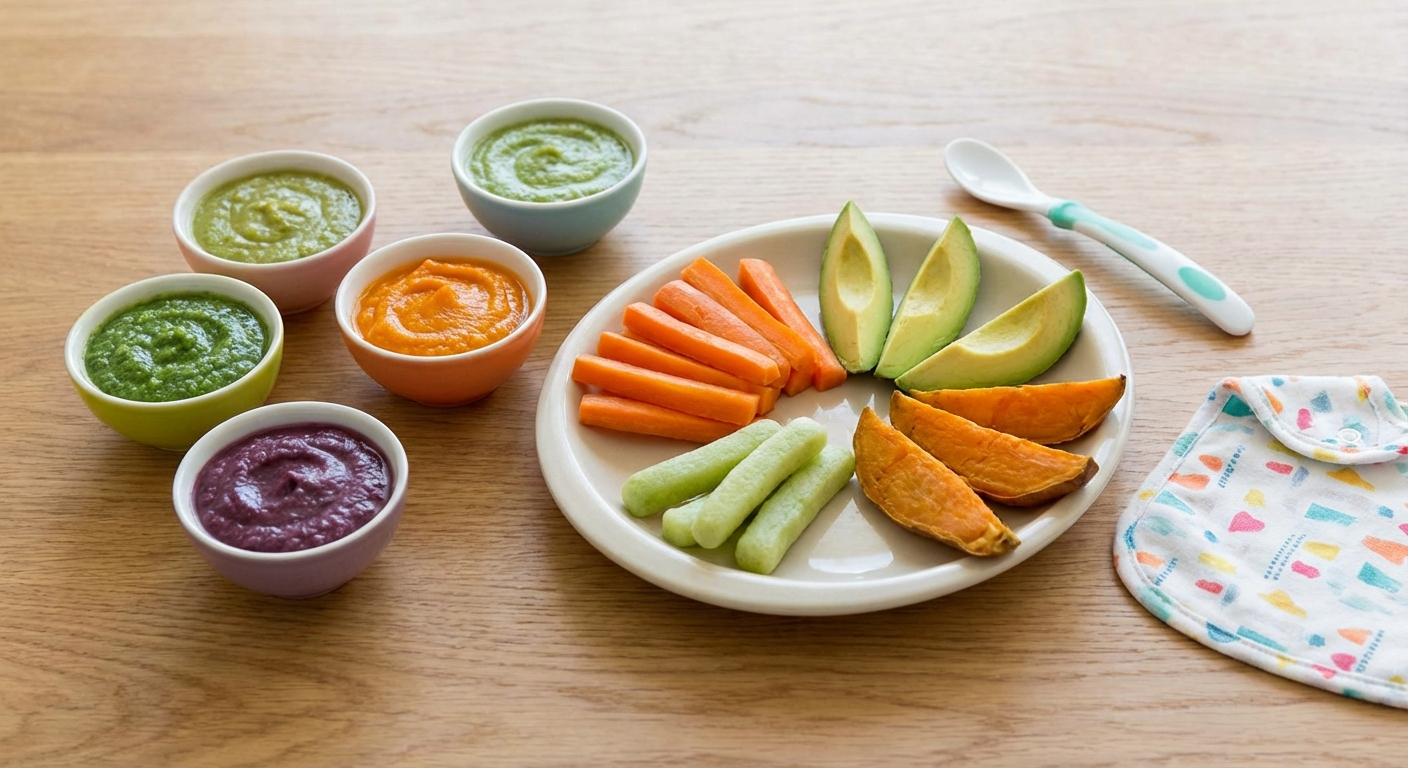 Every mealtime is a new experience for your baby — organic first foods give them the cleanest possible start.
Sources and Methodology
Methodology
This guide was researched and written by Sarah Mitchell, a qualified Paediatric Nutritionist with over 12 years of clinical experience in infant and toddler nutrition. Brands were evaluated against the following criteria:
- Certification verification: USDA National Organic Program database, Non-GMO Project verified product list, and Clean Label Project certified brands list
- Nutritional analysis: Per-serving macronutrient and micronutrient breakdown compared against AAP recommendations for infant nutrition
- Heavy metals transparency: Brands scored higher for publishing voluntary testing results and committing to internal limits stricter than FDA guidelines
- Ingredient quality: Assessed for processing level, presence of fillers (tapioca starch, corn starch), and sourcing transparency
- Value assessment: Price per serving calculated from Amazon and major retailer listings, March 2026
Products were not sponsored. No brand paid for inclusion or placement in this guide.
Sources
- USDA National Organic Program — Organic regulations and certification standards. ams.usda.gov/organic
- American Academy of Pediatrics (AAP) — Starting Solid Foods (2024 guidance). healthychildren.org
- AAP — Heavy Metals in Baby Food policy statement (2022). pediatrics.aappublications.org
- Environmental Working Group (EWG) — Dirty Dozen list and Children's Health initiative. ewg.org
- US House of Representatives Subcommittee on Economic and Consumer Policy — Baby Foods Are Tainted with Dangerous Levels of Arsenic, Lead, Cadmium, and Mercury (February 2021)
- Clean Label Project — Baby food purity award testing methodology. cleanlabelproject.org
- FDA — Closer to Zero: Action Plan for Baby Foods (2021, updated 2024). fda.gov
- Healthy Babies Bright Futures — What's in My Baby's Food? (2019, updated 2023). hbbf.org
- Gupta, R.S. et al. — "Trends and disparities in baby food consumption in the United States." JAMA Pediatrics (2023)
- Non-GMO Project — Verified product standards. nongmoproject.org
This article contains affiliate links. If you purchase through our links, we may earn a small commission at no extra cost to you. Our recommendations are always editorially independent.
Written by Sarah Mitchell, Paediatric Nutritionist | Last updated: March 2026