Guide
Iron-Rich Foods for Babies: Complete Guide (2026)
By Dr. Sarah Mitchell, RD, Paediatric Dietitian · Updated 2026-04-02
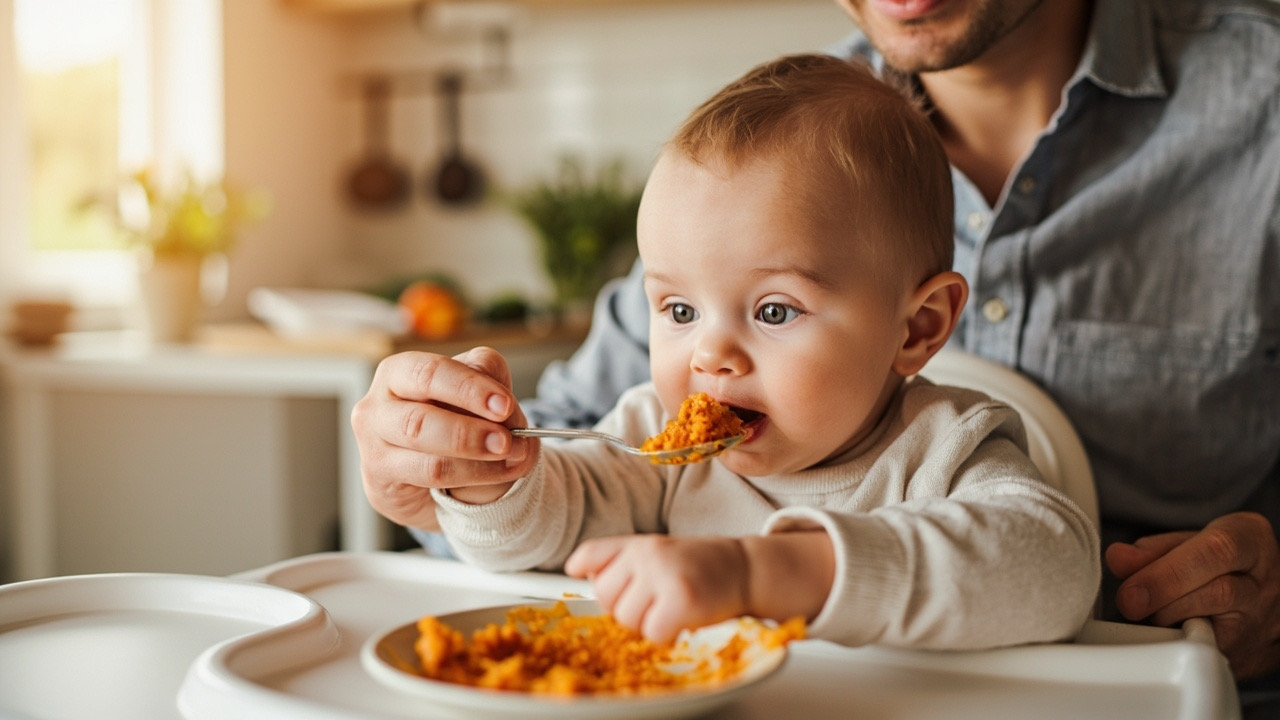
Iron deficiency is the most common nutritional deficiency in infants worldwide, yet it is entirely preventable with the right first foods. Babies aged 7–12 months need 11 mg of iron per day — a target that becomes critical the moment solid foods begin. This guide covers the best iron-rich foods for babies, how to serve them safely, and how to combine them for maximum absorption.
Last updated: April 2026
Table of Contents
- Why Iron Is Critical for Your Baby's Development
- How Much Iron Does Your Baby Actually Need?
- The Best Iron-Rich Foods for Babies: Full Comparison
- Heme vs Non-Heme Iron: What's the Difference?
- How to Serve Iron-Rich Foods at Every Stage
- Boosting Iron Absorption: The Vitamin C Pairing Guide
- Warning Signs of Iron Deficiency in Babies
- Sample Weekly Iron-Rich Meal Plan for Babies
- Frequently Asked Questions
- Sources & References
Why Iron Is Critical for Your Baby's Development
Iron is not just another nutrient on a checklist — it is fundamental to your baby's brain development, immune function, and energy levels in the first year of life and beyond.
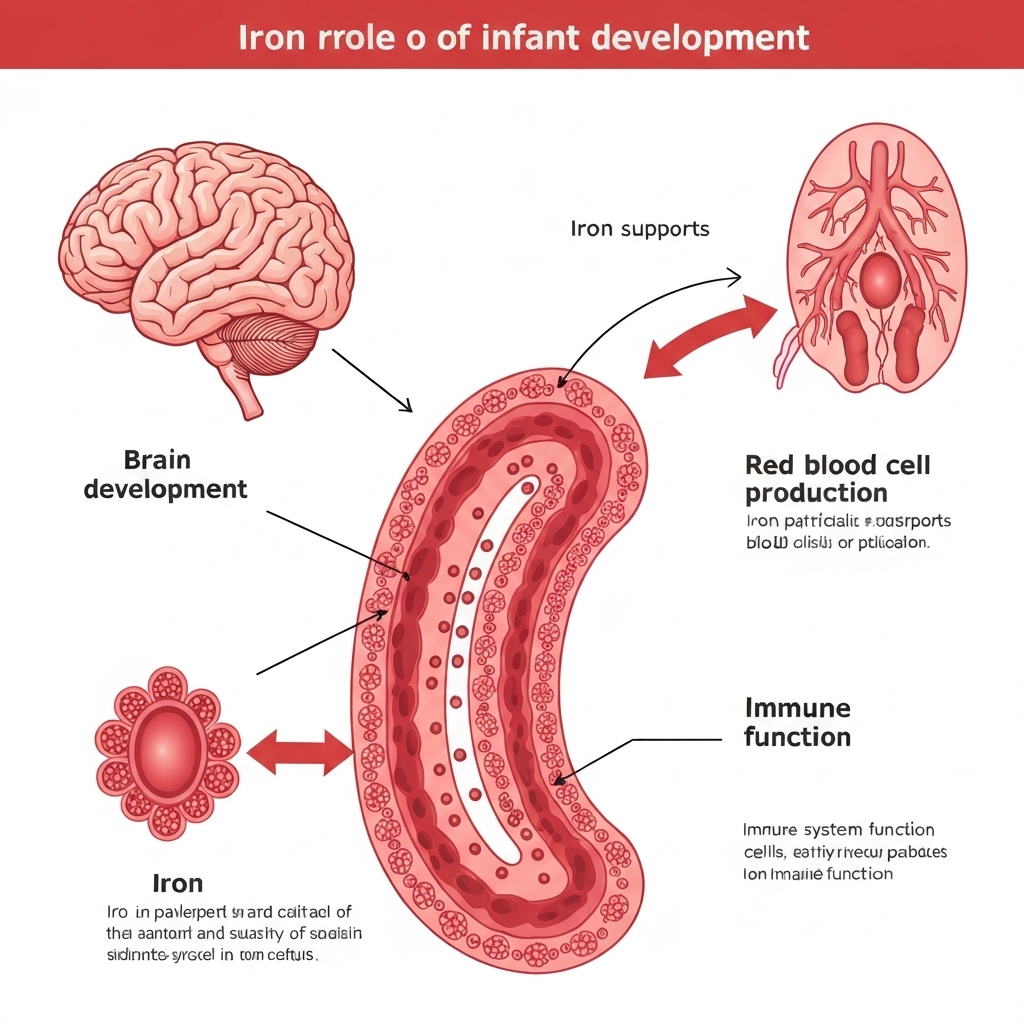
During the third trimester of pregnancy, babies build up iron stores that sustain them through the first six months of life. A full-term baby enters the world with roughly 75 mg of iron per kilogram of body weight, and breast milk — while containing highly bioavailable iron — delivers only about 0.35 mg per litre, which is not enough to maintain adequate iron status once those prenatal stores run out.
By six months, those stores are depleted. The window that follows — roughly 6 to 24 months — is one of the most iron-demanding periods in human development.
What Iron Actually Does in Your Baby's Body
- Haemoglobin production: Iron is the central component of haemoglobin, the protein in red blood cells that carries oxygen from the lungs to every organ and tissue. A baby who is iron-deficient has less haemoglobin, meaning their cells are literally oxygen-starved.
- Brain myelination: Iron is essential for myelination — the process by which nerve fibres develop their protective coating, which is critical for fast and accurate nerve signal transmission. The brain's frontal lobe, responsible for executive function and impulse control, is particularly vulnerable to iron deficiency during infancy.
- Immune defence: Iron supports the proliferation and maturation of immune cells. Iron-deficient infants have measurably weakened immune responses and are more susceptible to infections.
- Energy metabolism: Iron is required for cellular energy production via the electron transport chain. Low iron means reduced energy at the cellular level — which shows up as fatigue, poor feeding, and delayed motor development.
Research published in Nutrients (2021) found that iron deficiency anaemia in the first two years of life is associated with long-term cognitive impairment, even after the anaemia is treated — which is why prevention, rather than treatment, is the goal.
How Much Iron Does Your Baby Actually Need?
The Recommended Dietary Allowance (RDA) for iron varies significantly by age:
| Age | RDA for Iron |
|---|---|
| 0–6 months (full-term) | 0.27 mg/day (Adequate Intake; met by breast milk or formula) |
| 7–12 months | 11 mg/day |
| 1–3 years | 7 mg/day |
Source: NIH Office of Dietary Supplements, Iron Fact Sheet for Health Professionals, updated 2023.
The jump from 0.27 mg to 11 mg between 6 and 7 months is dramatic, and it explains why the introduction of solid foods — particularly iron-rich ones — is so important. Formula-fed babies receive iron-fortified formula (typically 10–12 mg/L), which helps bridge the gap. Breastfed babies, however, must get almost all of their iron from solid foods from 6 months onwards.
Some paediatricians recommend that exclusively breastfed babies begin a liquid iron supplement (1 mg/kg/day) from 4 months of age. Always discuss this with your paediatrician before supplementing.
Pre-Term and Low-Birth-Weight Babies
Pre-term babies have lower iron stores at birth (they missed the third-trimester iron transfer) and are at significantly higher risk of iron deficiency. The AAP recommends that pre-term babies receive iron supplementation from 2 weeks of age. If your baby was born early, iron monitoring is a routine part of their healthcare plan.
The Best Iron-Rich Foods for Babies: Full Comparison
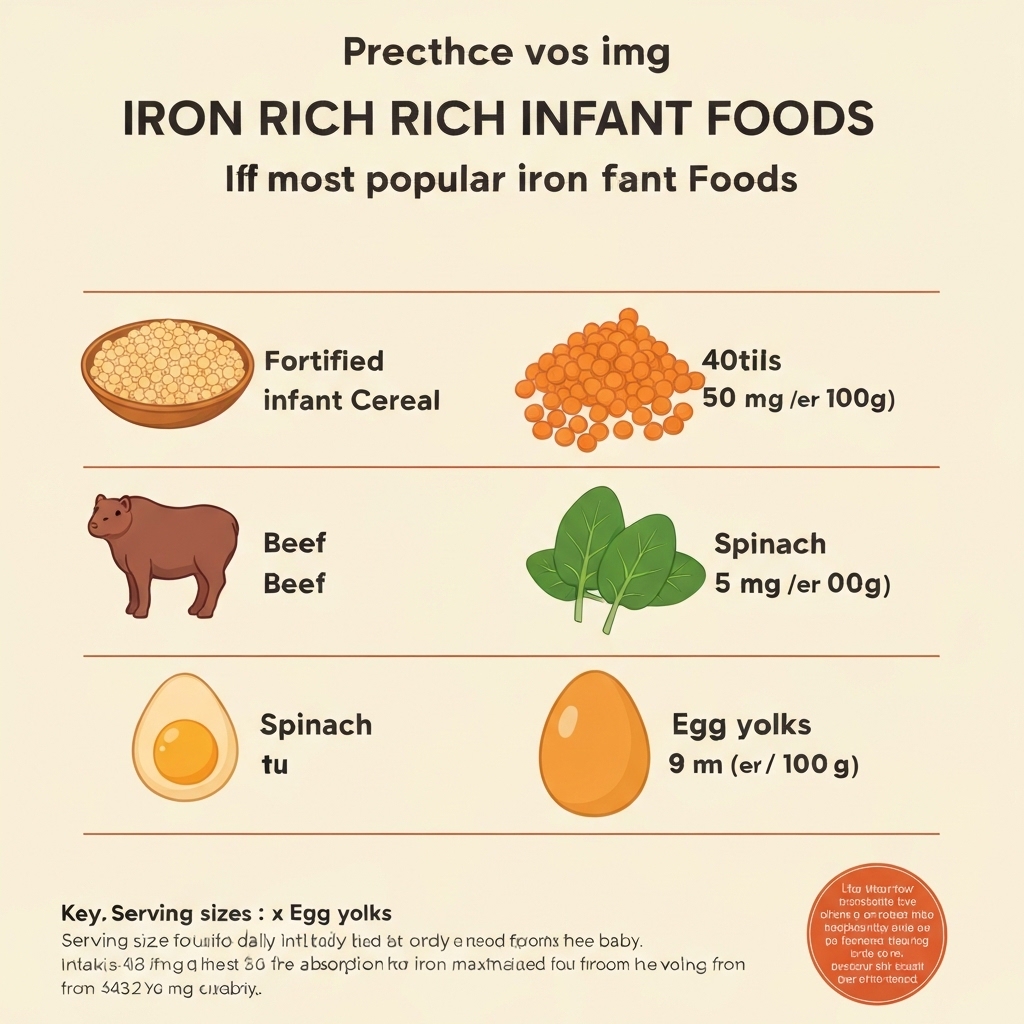
Not all iron-rich foods are equal. Absorption rates vary enormously depending on the iron type, the food matrix, and what you serve alongside it. The table below uses data from the USDA FoodData Central database to give you a clear picture.
| Food | Iron per 100g | Iron Type | Absorption Rate | Best Serving Age |
|---|---|---|---|---|
| Iron-fortified infant cereal (dry) | 40–50 mg | Non-heme | ~3–8% | 6 months+ |
| Chicken liver (cooked) | 11.6 mg | Heme | 15–35% | 6 months+ (limit to 1–2×/week) |
| Beef (lean, cooked) | 3.5 mg | Heme | 15–35% | 6 months+ |
| Lamb (cooked) | 2.7 mg | Heme | 15–35% | 6 months+ |
| Lentils (cooked) | 3.3 mg | Non-heme | 2–10% | 6 months+ |
| Kidney beans (cooked) | 2.9 mg | Non-heme | 2–10% | 6 months+ |
| Tofu (firm) | 2.7 mg | Non-heme | 2–10% | 6 months+ |
| Pumpkin seeds | 8.8 mg | Non-heme | 2–10% | 12 months+ (finely ground) |
| Egg yolk (cooked) | 2.7 mg | Non-heme | 2–10% | 6 months+ |
| Spinach (cooked) | 3.6 mg | Non-heme | 2–4% (oxalate-inhibited) | 6 months+ |
| Broccoli (cooked) | 0.7 mg | Non-heme | 5–10% | 6 months+ |
| Dark chocolate (70%+) | 11.9 mg | Non-heme | 2–5% | Not for under 12 months |
Data: USDA FoodData Central. Absorption rates: NIH Office of Dietary Supplements; Hurrell & Egli, American Journal of Clinical Nutrition, 2010.
Important note on iron-fortified cereals: While they appear highest in iron by weight, absorption rates are low because fortification uses electrolytic iron, a less bioavailable form. Serving them alongside vitamin C-rich foods improves absorption significantly. They remain a valuable and practical iron source for most families.
Heme vs Non-Heme Iron: What's the Difference?
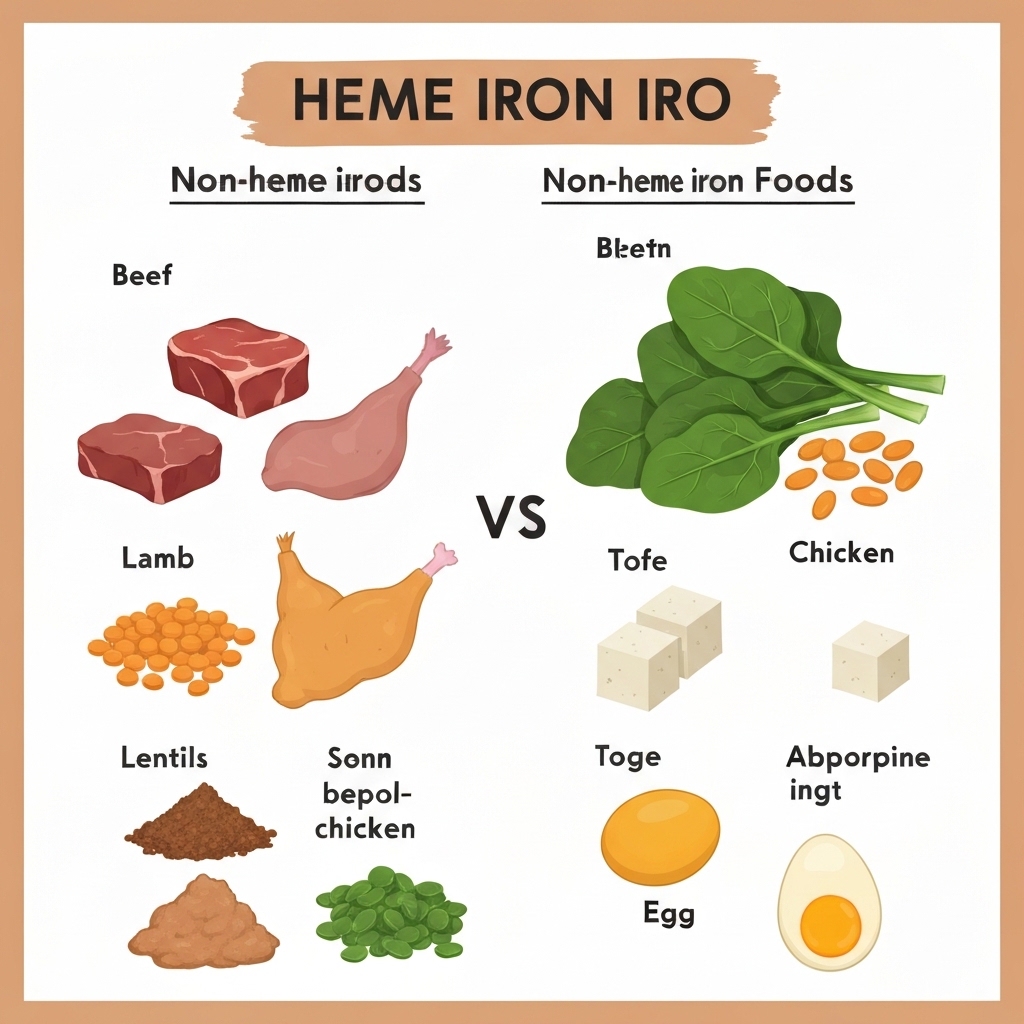
Understanding the difference between heme and non-heme iron is one of the most practical things you can know as a parent of a baby who is just starting solids.
Heme Iron
Heme iron is found exclusively in animal flesh — meat, poultry, and seafood. It is structurally bound to haemoglobin and myoglobin proteins in muscle tissue, and the body absorbs it through a dedicated transport pathway that is largely independent of other dietary factors.
Absorption rate: 15–35%, regardless of what else you eat with it.
Best sources for babies:
- Pureed beef or lamb (6 months+)
- Chicken, turkey (6 months+)
- Chicken or lamb liver (6 months+, limit to 1–2 servings per week due to high vitamin A content)
- Canned salmon or sardines with soft, mashed bones (7–8 months+)
Non-Heme Iron
Non-heme iron is found in plant foods, eggs, dairy (trace amounts), and fortified foods. It exists as free ionic iron and is absorbed through a different pathway that is strongly influenced by other dietary factors — both inhibitors and enhancers.
Absorption rate: 2–20%, highly variable.
Best sources for babies:
- Iron-fortified infant cereals
- Lentils, chickpeas, black beans, kidney beans
- Tofu and tempeh
- Spinach, kale, broccoli
- Egg yolk
- Dried apricots (pureed for young babies)
- Pumpkin seeds (ground for older babies)
The Smart Strategy: Combine Both
For omnivore babies, the most effective strategy is to regularly include both heme and non-heme iron sources. Research shows that even small amounts of meat served alongside plant-based iron foods significantly boost the absorption of the non-heme iron — this is called the "meat factor" effect.
For vegetarian and vegan babies, the vitamin C pairing strategy (detailed in the next section) becomes essential.
How to Serve Iron-Rich Foods at Every Stage
The way you serve iron-rich foods needs to match your baby's developmental stage. The right iron source offered in the wrong texture can be a choking hazard — or simply get spat out and refused.
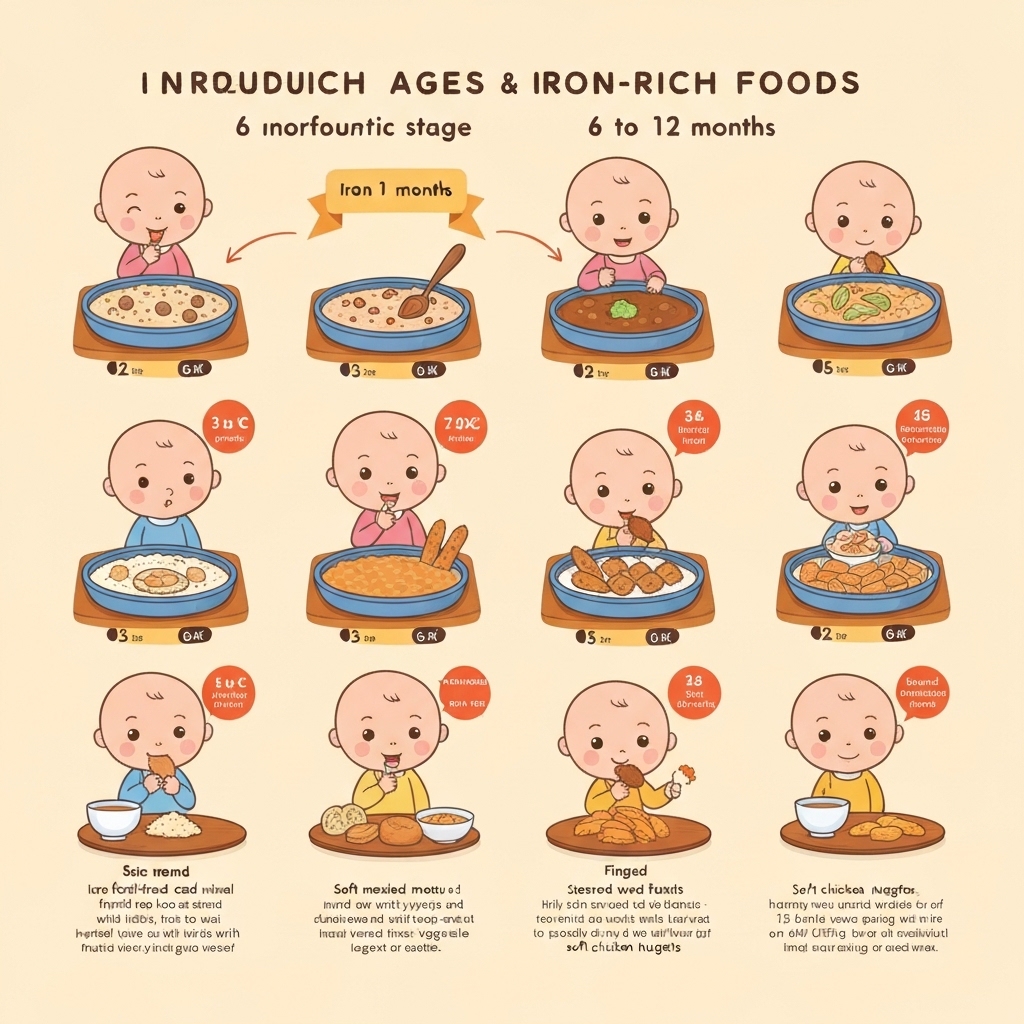
6 Months: Smooth Purees and Single Ingredients
At 6 months, most babies are ready for their very first solid foods. This is the moment to prioritise iron — not rice cereal and fruit.
Best iron-rich options at 6 months:
- Pureed beef or lamb: Cook a lean cut until very tender, then blend with breast milk, formula, or a little cooking liquid until completely smooth. A single tablespoon is a serving.
- Iron-fortified infant cereal: Mix with breast milk or formula to a smooth, runny consistency. Single-grain iron-fortified oat or barley cereal works well.
- Red lentil puree: Red lentils cook very soft and blend to a smooth, naturally sweet puree that most babies accept readily.
- Pureed egg yolk: Hard-boil an egg, remove the yolk, and mash with a little breast milk or formula. Serve fully cooked — do not offer raw or undercooked egg.
If you are starting baby-led weaning at 6 months, you can offer soft, easily mashed finger foods rather than purees — see our Baby-Led Weaning Starter Guide for detailed guidance on shapes and sizes.
7–9 Months: Soft Lumps and Mashed Textures
As your baby's oral skills develop, you can progress to foods with more texture — soft lumps, thick mashes, and small pieces.
Iron-rich options for 7–9 months:
- Soft-cooked, minced or finely shredded beef, lamb, or chicken
- Mashed lentils or well-cooked, mashed beans
- Scrambled or mashed hard-boiled egg
- Soft tofu, mashed or cut into small cubes
- Iron-fortified oatmeal with a soft fruit mash stirred in
- Soft-cooked broccoli florets (small enough to pick up)
10–12 Months: Finger Foods and Family Meals
By 10 months, most babies can handle soft finger foods with increasing skill. This is a great time to transition towards eating iron-rich foods in forms closer to what the rest of the family eats.
Iron-rich finger food ideas for 10–12 months:
- Soft strips of cooked beef or lamb (tender enough to squash between fingers)
- Small cubes of firm tofu, lightly pan-fried for grip
- Well-cooked whole lentils in a soft dal
- Soft-boiled egg, halved or quartered
- Mini meatballs (beef or lamb, soft and moist)
- Small pieces of soft-cooked, iron-fortified oat-based pancakes
For a full guide to finger foods at this stage, see our article on finger foods for 8-month-olds and beyond.
Boosting Iron Absorption: The Vitamin C Pairing Guide
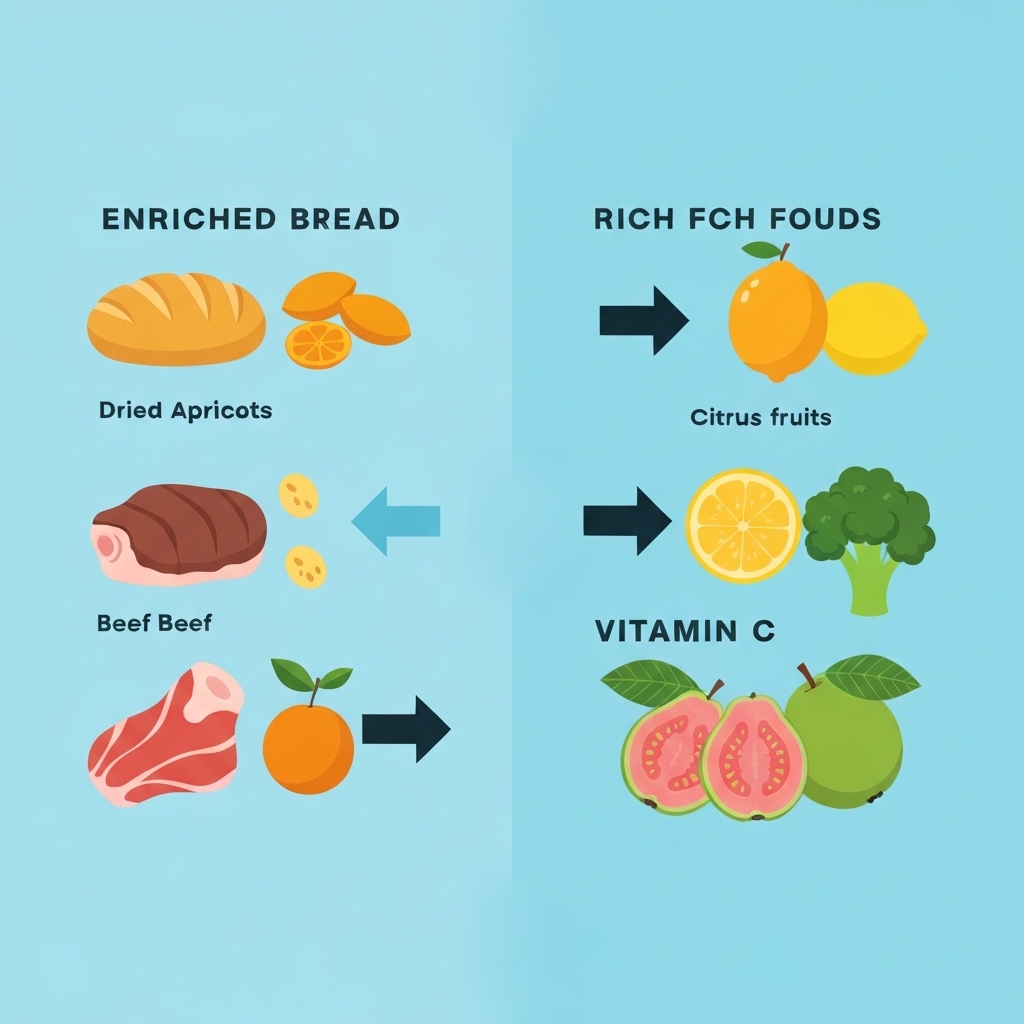
Vitamin C transforms non-heme iron absorption. In the acidic environment of the stomach, ascorbic acid (vitamin C) reduces ferric iron (Fe³⁺) to ferrous iron (Fe²⁺) — the form that intestinal cells can actually absorb. Studies have shown that vitamin C consumed alongside non-heme iron can increase absorption by 2–3 times (Hallberg et al., American Journal of Clinical Nutrition, 1987).
This pairing matters most for plant-based iron sources. Heme iron from meat is already well-absorbed and is not significantly affected by vitamin C.
Top Vitamin C-Rich Foods for Babies
| Vitamin C Source | Vitamin C per 100g | Best Pairing |
|---|---|---|
| Pureed strawberries | 59 mg | Iron-fortified cereal |
| Mango puree | 36 mg | Lentil puree |
| Kiwi (mashed) | 93 mg | Spinach puree |
| Red capsicum (pureed/soft) | 128 mg | Bean puree or tofu |
| Broccoli (cooked, soft) | 65 mg | Fortified oatmeal |
| Oranges/orange juice | 53 mg | Egg yolk, lentils |
| Cauliflower (cooked) | 44 mg | Any plant iron source |
Data: USDA FoodData Central
Practical Pairing Ideas
- Stir mashed strawberries or pureed mango into iron-fortified baby oatmeal
- Add a spoonful of soft-cooked red capsicum to lentil soup
- Mix a squeeze of orange juice into bean or lentil purees
- Serve broccoli florets alongside tofu at the same meal
- Mash kiwi fruit and offer it with spinach puree
What REDUCES Iron Absorption?
Equally important: know what to avoid serving with iron-rich meals.
- Cow's milk and dairy: Calcium competes with iron for absorption. Avoid offering large amounts of yoghurt, cheese, or cow's milk drinks at the same meal as your iron-rich food. Small amounts of dairy as an ingredient (e.g., a spoonful of yoghurt stirred into oatmeal) are generally fine.
- Tea and coffee: Polyphenols and tannins in tea and herbal teas strongly inhibit non-heme iron absorption. These are not recommended for babies under 12 months anyway.
- High-phytate foods: Whole grains and legumes contain phytic acid, which can bind non-heme iron. Soaking, sprouting, or fermenting these foods reduces phytate content.
For comprehensive guidance on meal construction and batch cooking, visit planfamilymeals.com — their resources on iron-rich family meals work well for adapting adult recipes for babies.
Warning Signs of Iron Deficiency in Babies
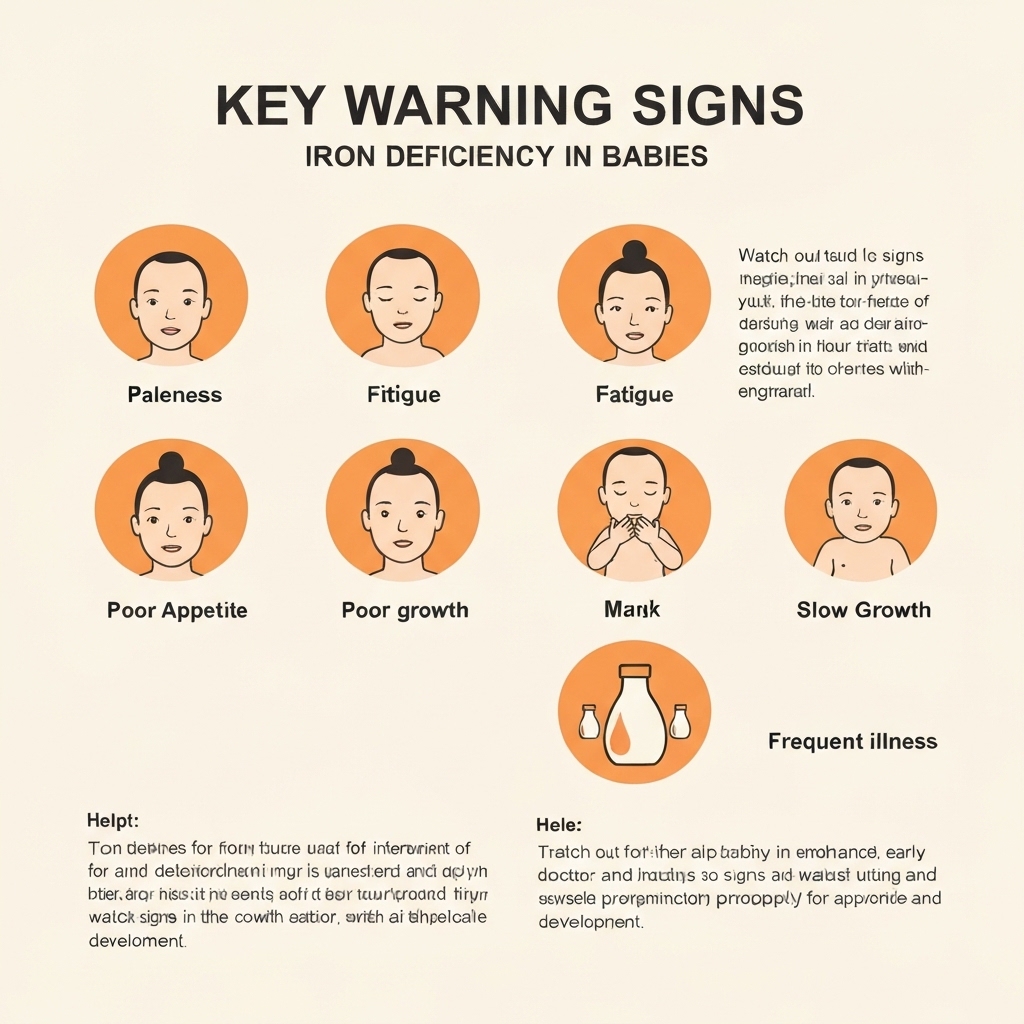
Iron deficiency can develop gradually and subtly. By the time obvious signs appear, a baby may already have significant iron depletion. Knowing what to look for allows you to act early.
Physical Signs
- Unusual pallor: Look at the inside of your baby's lower eyelids, lips, and gums. In iron-deficient babies, these areas appear pale or white rather than pink-red. This is one of the earliest visible signs.
- Low energy and excessive fatigue: A baby who seems unusually tired, naps longer than expected, or lacks the energy to engage in play may be showing early signs of iron depletion.
- Rapid or irregular heartbeat: The heart works harder to compensate for reduced oxygen-carrying capacity. In moderate to severe anaemia, you may notice your baby breathing faster or seeming to tire during feeding.
- Swollen or sore tongue: Iron deficiency can cause glossitis — an inflamed, swollen tongue.
Developmental and Behavioural Signs
- Delayed motor milestones: Rolling, sitting, crawling, and pulling to stand may be delayed in iron-deficient babies. Research has consistently linked iron deficiency anaemia with delayed psychomotor development.
- Poor cognitive engagement: Reduced curiosity, lack of interest in exploring toys or the environment, and shorter attention spans can reflect the neurological impact of iron deficiency.
- Irritability and fussiness: Unexplained irritability is a recognised symptom, though it is non-specific and has many causes.
- Pica: In older babies and toddlers, iron deficiency can cause pica — the urge to eat non-food substances like dirt, clay, or ice. If you notice this, seek medical review promptly.
When to See Your Paediatrician
If you notice two or more of these signs, or if your baby is in a higher-risk group (premature birth, low birth weight, exclusively breastfed without iron-rich solids, vegetarian/vegan diet), request a blood test. A simple full blood count (FBC) and serum ferritin test can confirm iron status. Do not attempt to treat suspected iron deficiency with over-the-counter supplements without medical guidance — excess iron is toxic.
Iron deficiency is also a common concern when introducing new allergens. See our baby food allergy introduction guide for how to introduce high-iron allergenic foods like eggs safely.
Sample Weekly Iron-Rich Meal Plan for Babies
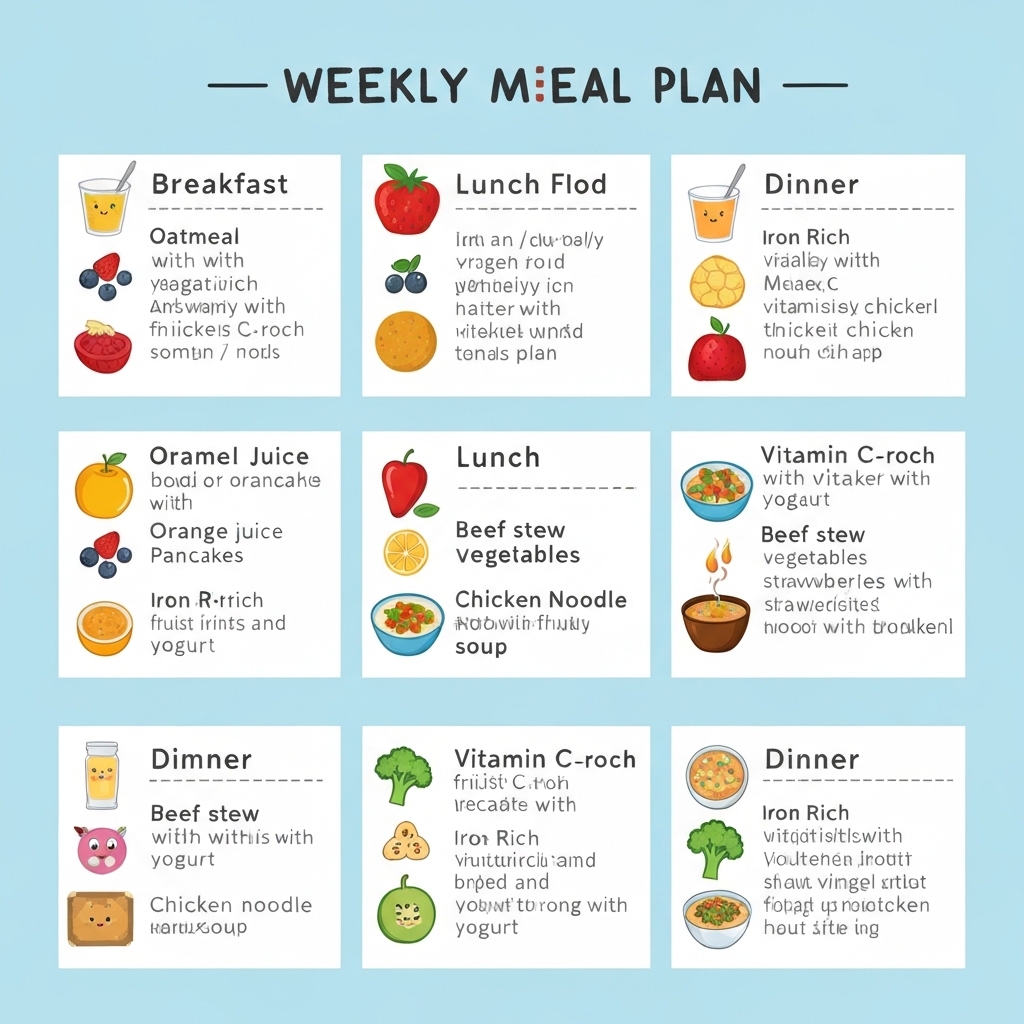
This sample plan is designed for babies aged 7–9 months who have been eating solids for several weeks and are ready for more variety. Adjust textures to match your baby's individual stage.
A note on quantities: Babies at this age are guided by hunger and fullness cues. These are suggestions — never pressure your baby to finish a serving. Breast milk or formula remains the primary nutrition source throughout the first year.
Monday
- Breakfast: Iron-fortified oatmeal with mashed strawberries (vitamin C boost) and a little breast milk
- Lunch: Red lentil puree with soft-cooked carrots; small pieces of soft steamed broccoli
- Dinner: Pureed beef with sweet potato and a spoonful of mango puree
Tuesday
- Breakfast: Scrambled egg with soft-cooked capsicum (vitamin C boost)
- Lunch: Soft tofu cubes with mashed peas and pureed kiwi on the side
- Dinner: Chicken and spinach puree; iron-fortified grain crackers (softened if needed)
Wednesday
- Breakfast: Iron-fortified barley cereal with pureed mango
- Lunch: Black bean puree with mashed avocado and a squeeze of orange juice
- Dinner: Lamb and lentil soup, pureed or soft-lumpy; steamed soft broccoli
Thursday
- Breakfast: Mashed hard-boiled egg yolk with soft-cooked red capsicum strips
- Lunch: Pureed chicken liver pâté (small amount) on a rice cake or spread into a puree; steamed carrot
- Dinner: Red lentil dal with soft-cooked cauliflower (vitamin C boost)
Friday
- Breakfast: Iron-fortified oatmeal with blended strawberries
- Lunch: Soft tofu with mashed peas and soft kiwi pieces
- Dinner: Minced beef with mashed sweet potato and a little pureed orange
Saturday
- Breakfast: Scrambled egg with broccoli pieces (vitamin C boost)
- Lunch: Lentil and vegetable soup, pureed; mango puree dessert
- Dinner: Lamb mince with soft-cooked green peas and pureed carrot
Sunday
- Breakfast: Iron-fortified cereal with soft pear puree (add vitamin C-rich fruit where possible)
- Lunch: Chickpea and spinach puree; soft-cooked red capsicum strips
- Dinner: Family-style soft beef or lamb stew (lightly seasoned, no added salt); steamed broccoli
For guidance on making these meals efficiently with a baby food maker, see our reviews of the best baby food makers and blenders — equipment that can dramatically reduce your prep time for batch-cooking iron-rich purees.
You can also find ideas for making homemade versions of these dishes in our complete guide to homemade baby purees.
Frequently Asked Questions
When should I start giving my baby iron-rich foods?
Start offering iron-rich foods as soon as your baby begins solid foods — typically around 6 months of age. The American Academy of Pediatrics recommends that iron-rich foods be among the very first solids offered, particularly for breastfed babies whose prenatal iron stores are nearly exhausted by this age.
How much iron does my baby need per day?
Babies aged 7–12 months need 11 mg of iron per day, according to the NIH Office of Dietary Supplements. Babies aged 0–6 months need just 0.27 mg per day (an adequate intake mostly met by breast milk or formula). Toddlers aged 1–3 years need 7 mg per day. Remember that not all dietary iron is absorbed — serving iron-rich foods with vitamin C helps maximise what your baby actually takes in.
What are the signs of iron deficiency in babies?
Key signs include unusual pallor (especially inside the lower eyelids and lips), low energy, poor appetite, irritability, delayed motor milestones, and frequent infections. Severe deficiency can cause a rapid heartbeat and pica (craving non-food substances). A blood test from your paediatrician is the only reliable way to confirm iron deficiency — do not attempt to diagnose it at home.
Can babies get enough iron from breast milk alone after 6 months?
No. Breast milk contains iron in a highly bioavailable form, but not in quantities sufficient to meet a baby's needs after 6 months. The AAP recommends introducing iron-rich solid foods at 6 months, and some paediatricians recommend a liquid iron supplement (1 mg/kg/day) for exclusively breastfed babies from 4 months. Speak with your paediatrician about what is right for your baby.
Does vitamin C really help babies absorb iron better?
Yes, significantly. Vitamin C (ascorbic acid) converts non-heme iron into a more bioavailable form in the digestive tract, increasing absorption by up to three times. This effect is most important when your baby is eating plant-based iron sources like lentils, beans, fortified cereals, spinach, or tofu. Serving these with vitamin C-rich foods — such as mashed strawberries, pureed mango, or soft-cooked red capsicum — is one of the most effective nutritional strategies you can use.
Are iron supplements safe for babies?
Iron supplements can be appropriate and safe for babies at risk of deficiency, but only under medical supervision. Excess iron supplementation can cause constipation, stomach upset, and — in large doses — toxicity. Always consult your paediatrician before giving your baby any iron supplement. If your baby is getting a good range of iron-rich solid foods, supplementation may not be necessary.
Sources & References
-
NIH Office of Dietary Supplements. Iron Fact Sheet for Health Professionals. Updated March 2023. Available at: https://ods.od.nih.gov/factsheets/Iron-HealthProfessional/
-
American Academy of Pediatrics (AAP). Diagnosis and Prevention of Iron Deficiency and Iron-Deficiency Anemia in Infants and Young Children (0–3 Years of Age). Pediatrics, 2010; 126(5): 1040–1050. DOI: 10.1542/peds.2010-2576
-
USDA FoodData Central. Full nutrient data for iron-containing foods. U.S. Department of Agriculture. Accessed April 2026. Available at: https://fdc.nal.usda.gov/
-
Hurrell R, Egli I. Iron bioavailability and dietary reference values. American Journal of Clinical Nutrition, 2010; 91(5): 1461S–1467S. DOI: 10.3945/ajcn.2010.28674D
-
Hallberg L, Brune M, Rossander L. Effect of ascorbic acid on iron absorption from different types of meals. Studies with ascorbic-acid-rich foods and synthetic ascorbic acid given in different amounts with different meals. Human Nutrition: Applied Nutrition, 1986; 40(2): 97–113.
-
World Health Organization (WHO). Nutritional anaemias: tools for effective prevention and control. Geneva: WHO; 2017. Available at: https://www.who.int/publications/i/item/9789241513067
-
Grantham-McGregor S, Ani C. A review of studies on the effect of iron deficiency on cognitive development in children. Journal of Nutrition, 2001; 131(2S-2): 649S–668S. DOI: 10.1093/jn/131.2.649S
-
Domellöf M, Braegger C, Campoy C, et al. Iron Requirements of Infants and Toddlers. Journal of Pediatric Gastroenterology and Nutrition, 2014; 58(1): 119–129. DOI: 10.1097/MPG.0000000000000206
About the Author
Dr. Sarah Mitchell, RD is a Registered Dietitian specialising in paediatric nutrition and infant feeding. She holds a PhD in Nutritional Science from the University of Melbourne and has worked in hospital paediatric wards and community health settings for over 12 years. Dr. Mitchell consults for first foods programmes across Australia and writes evidence-based content to help parents make confident feeding decisions in the critical first year.
Are you planning to introduce iron-rich foods alongside other new allergens? Our Baby Food Allergy Introduction Guide walks you through how to safely introduce common allergens — including eggs and legumes — step by step. If you are exploring baby-led weaning as your primary approach, compare the methods in our Baby-Led Weaning vs Purees guide to find what works best for your family.